The Role of Dark Chocolate in Mood, Energy, and Intimacy
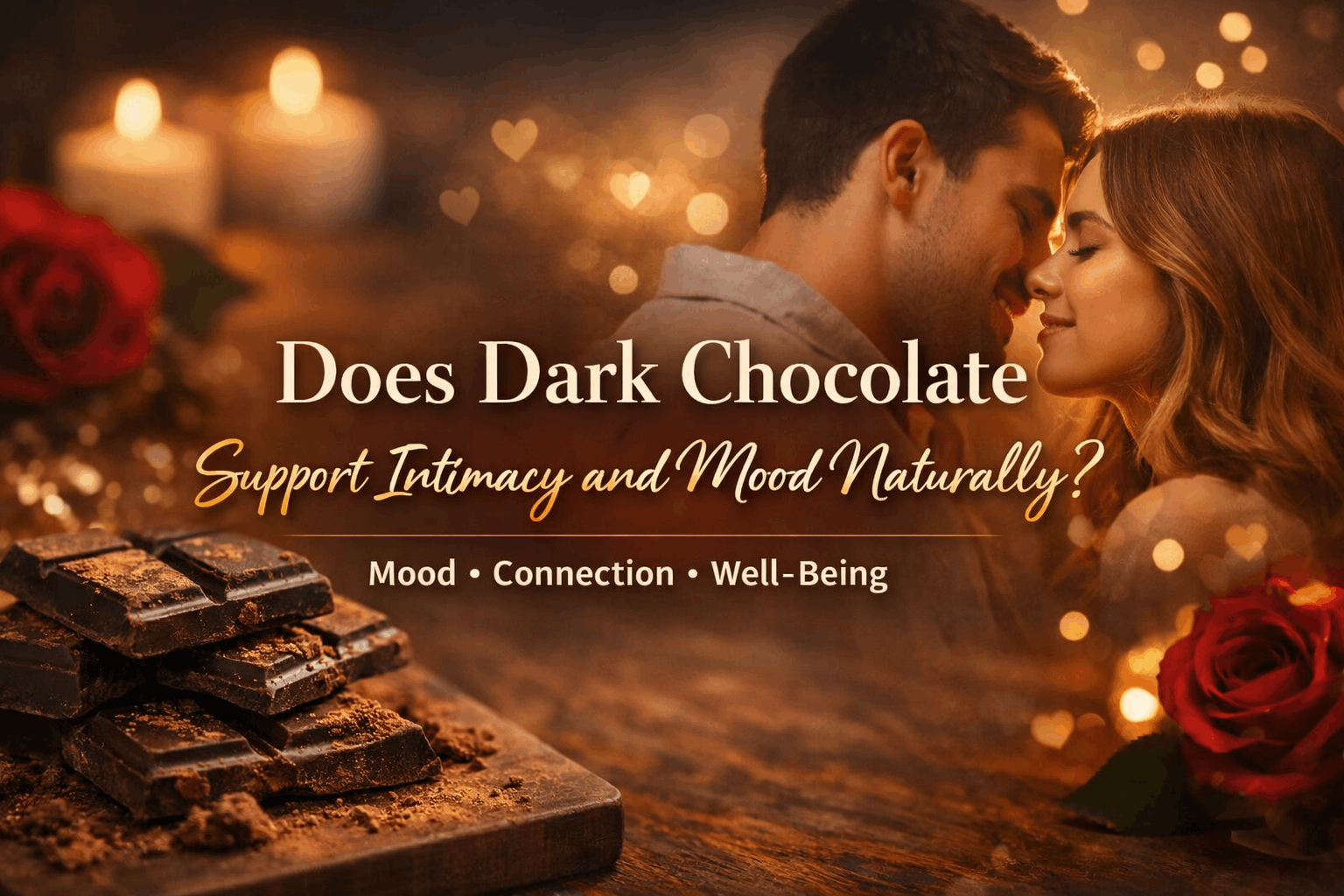
The Sweet Science Behind Desire, Mood, and Intimacy
Dark chocolate has always had a reputation for being romantic. From Valentine’s gifts to late-night desserts shared between couples, it’s often linked with love and intimacy. But beyond the symbolism, many people ask a real question:
Does dark chocolate actually help with intimacy?
The short answer: yes — indirectly and naturally.
Dark chocolate doesn’t work like a drug or supplement, but it supports mood, blood flow, energy, and emotional connection, all of which play an important role in a healthy sexual life.
Let’s break it down properly.
Understanding Sexual Wellness First
Sexual performance and desire are not just physical. They depend on:
- Mental state (stress, mood, confidence)
- Blood circulation
- Energy levels
- Hormonal balance
- Emotional connection with your partner
Dark chocolate affects several of these areas — gently, safely, and naturally.
1. Dark Chocolate Boosts Mood (And Mood Affects Desire)
One of the biggest reasons couples feel disconnected sexually is stress and mental fatigue.
Dark chocolate contains compounds that support emotional well-being:
Key Mood-Boosting Compounds:
- Phenylethylamine (PEA) – Often called the “love chemical,” it’s associated with feelings of attraction and excitement.
- Serotonin precursors – Help promote relaxation and happiness.
- Magnesium – Supports calmness and reduces anxiety.
When your mind feels lighter and happier, desire comes more naturally.
👉 A relaxed mind = a more responsive body.
2. Improved Blood Flow = Better Physical Response
Healthy blood circulation is essential for sexual arousal in both men and women.
Dark chocolate (especially 70% cocoa or higher) is rich in flavonoids, plant compounds known to:
- Support healthy blood vessels
- Improve circulation
- Enhance nitric oxide production (important for blood flow)
Better circulation can help the body respond more easily to intimacy, especially when combined with a healthy lifestyle.
This is not a medical treatment — it’s gentle nutritional support.
3. Energy Without Jitters
Sexual activity requires physical energy, but heavy caffeine or sugar spikes can do more harm than good.
Dark chocolate offers:
- A small amount of natural caffeine
- Theobromine (a mild, longer-lasting stimulant)
- Healthy fats for sustained energy
This combination can help you feel more alert and present, without the crash.
4. Sensory Pleasure Matters in Intimacy
Sex is not only about performance — it’s about experience.
Dark chocolate:
- Melts slowly
- Has a rich aroma
- Engages taste and smell
These sensory effects can:
- Increase anticipation
- Encourage mindfulness
- Make shared moments feel more special
Sharing chocolate can be a simple intimacy ritual that reconnects couples emotionally before physical closeness.
5. Confidence and Self-Image Support
When consumed in moderation, dark chocolate can fit into a healthy lifestyle without guilt.
Feeling good about what you eat often:
- Improves confidence
- Reduces food-related stress
- Supports positive body image
Confidence plays a huge role in sexual comfort and openness.
What Dark Chocolate Is Not
To be clear and responsible:
- ❌ It is not a medicine
- ❌ It does not cure sexual problems
- ❌ It does not instantly increase libido
What it does is support the conditions that allow intimacy to grow naturally.
How to Use Dark Chocolate for Intimacy
If you want to include it meaningfully:
- Choose 70% cocoa or higher
- Avoid excessive sugar
- Enjoy it slowly, preferably together
- Pair it with quality time, conversation, or a relaxed setting
Think of it as part of a romantic atmosphere, not a performance tool.
Final Thoughts
Dark chocolate helps sex indirectly — by improving mood, supporting circulation, enhancing energy, and deepening emotional connection.
In today’s fast, stressful world, intimacy often fades not because love disappears, but because presence does. Dark chocolate encourages slowing down, indulging the senses, and reconnecting — which is where real intimacy begins.
Sometimes, romance doesn’t need a solution.
It just needs a spark. 🍫❤️
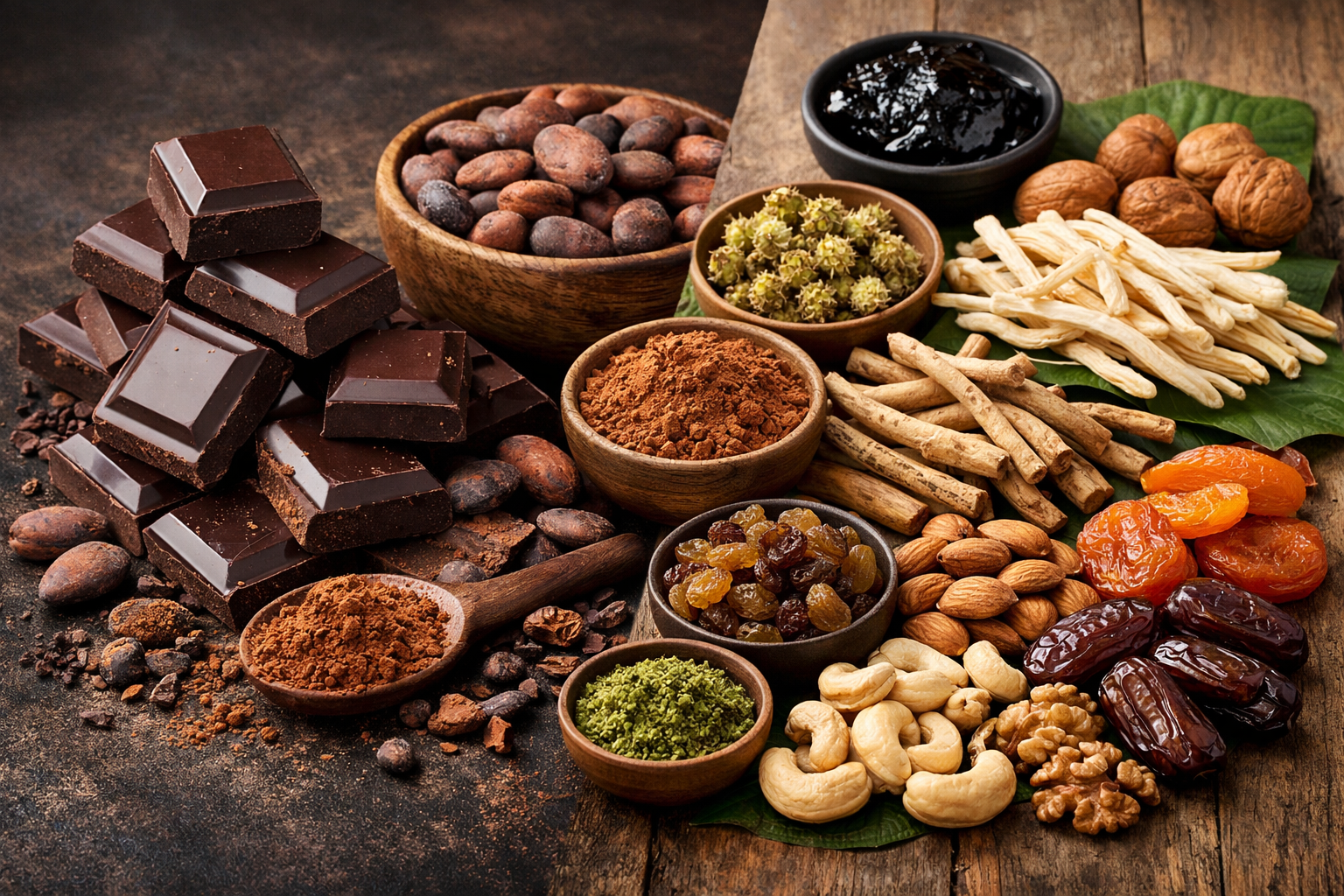
Dark chocolate has long been appreciated for its rich taste and cultural significance. In recent years, it has also gained attention for being commonly associated with ingredients and nutrients that are often described as natural mood supporters. While dark chocolate is not a treatment or solution for emotional well-being, its composition and traditional use make it an interesting part of everyday food choices.
Understanding Dark Chocolate
Dark chocolate is made with a higher percentage of cocoa solids compared to milk chocolate. This gives it a more intense flavor and a distinct profile that many people enjoy. Cocoa naturally contains compounds such as flavonoids and small amounts of naturally occurring stimulants, which have contributed to its long-standing popularity across cultures.
What Are Natural Mood Boosters?
Natural mood boosters are commonly used ingredients or nutrients that people associate with feelings of comfort, relaxation, or mental freshness. These are not medicines and do not guarantee specific outcomes. Instead, they are typically included in foods and beverages as part of a balanced and mindful lifestyle.
Examples often discussed include plant-based extracts, minerals, and naturally sourced compounds found in everyday foods.
The Common Link Between Dark Chocolate and Mood-Supporting Ingredients
Dark chocolate is frequently paired with natural ingredients because of its ability to complement flavors and textures. Its smooth and slightly bitter taste blends well with nuts, fruits, and plant-derived elements that are traditionally linked with overall wellness routines.
Many people also associate dark chocolate consumption with moments of relaxation or personal enjoyment. This connection is largely experiential and cultural rather than medical, highlighting how food choices can influence daily habits and routines.
Enjoyment as Part of a Balanced Lifestyle
Dark chocolate is often enjoyed in moderation as part of a varied diet. Its appeal lies in its taste, versatility, and the experience it offers rather than any promised effect. When paired thoughtfully with natural ingredients, it can add variety and richness to food choices without making unrealistic claims.
A Thoughtful Perspective
The connection between dark chocolate and natural mood boosters is best understood as a combination of tradition, taste, and personal preference. While many enjoy dark chocolate during moments of rest or celebration, it should always be viewed as a food product meant for enjoyment not as a substitute for professional care or lifestyle balance.